Las Fallas festival in Valencia: what happens each day and how to enjoy it without burning out
What each Fallas event is (despertà, mascletà, plantà, Ofrenda, Nit del Foc, Cremà), where the festival comes from, how much money and noise it generates, and how to enjoy it from the centre or from a neighbourhood without spending the day behind barriers.
Las Fallas is a three-week festival with a calendar of events that repeats almost unchanged every year, and that almost nobody explains from start to finish. This page does: what each event is, what time it happens, where the festival comes from and how much it generates.
And one thing the leaflets avoid: how to enjoy it without ending the week exhausted. Because the festival has 348 committees and 1,857 installations spread across the whole city, and the visitor who only knows Plaza del Ayuntamiento gets the least comfortable part.
Where do the Fallas come from?
The first documentary reference dates from 1784, when the city's magistrate banned lighting fires too close to building façades. By then the custom already existed: on the eve of Saint Joseph, patron saint of carpenters, the guild burned the parots in the street, the wooden stands for the oil lamps that had lit the workshop through the winter.
From there come two theories that National Geographic Historia sums up under a cautious heading, "uncertain origin". One says the junk gradually took on human form until it became the ninots (the figures).
The other, put forward by the Marquis of Cruïlles, speaks of a bonfire to clear out the workshops. Neither is definitive, and both are told as if they were.
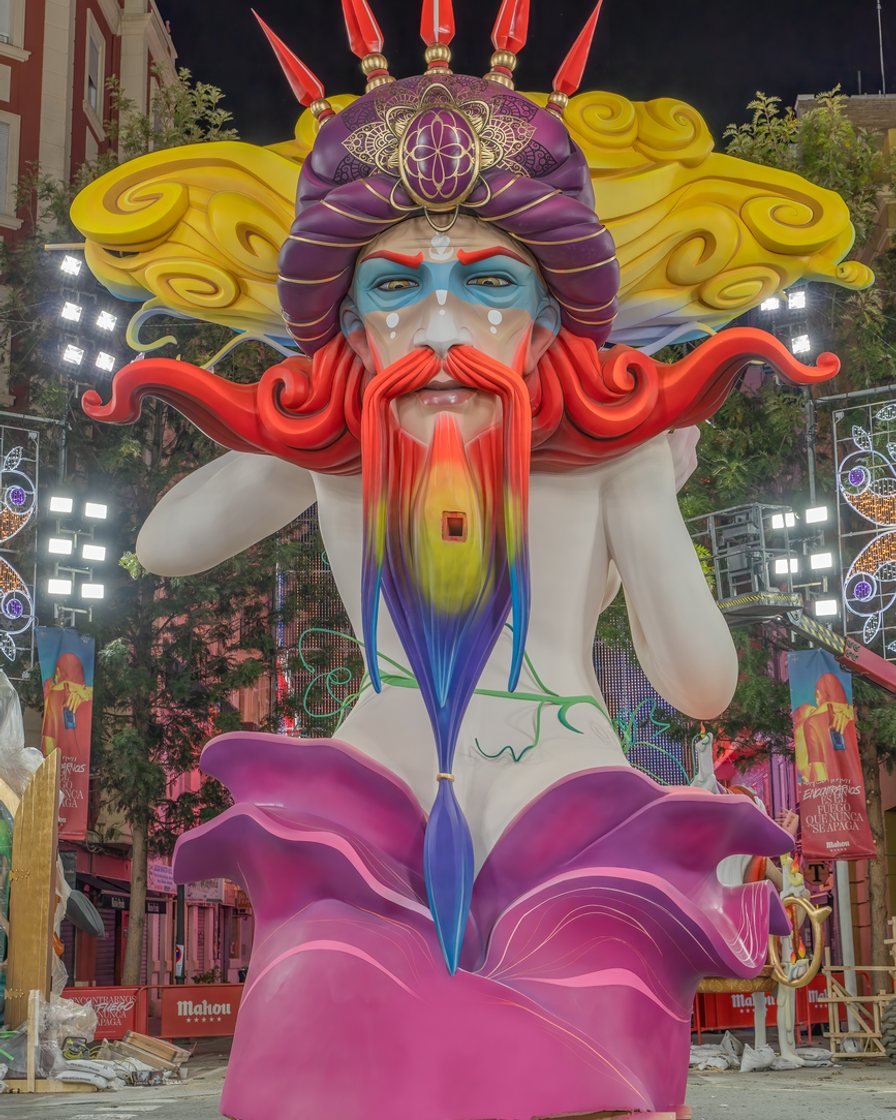
What is documented is the growth: from neighbourhood bonfires to twenty-metre monuments signed by artists with their own guild and district, the Ciutat de l'Artista Faller, and a political satire that La Vanguardia summed up in March 2026 as "three centuries of growth". UNESCO has inscribed the Fallas as Intangible Cultural Heritage; our sources cite the inscription without dating it, so we do not give it a year.
The events, one by one
The times are those of 2026, the latest published edition. They change little from year to year, but the Junta Central Fallera only sets the final ones in its programme, which for 2026 came out in December 2025.
| Event | What it is | When (2026) |
|---|---|---|
| Crida | The call to the festival from the Torres de Serranos, led by the Fallera Mayor | 22 February 2026 |
| Despertà and macrodespertà | Firecrackers through the streets at dawn to wake the neighbourhood | At 7:00 and 7:30, on the day of the Crida |
| Cabalgata del Ninot | Satirical parade by the committees | 28 February 2026 |
| Mascletà | A 5 to 7 minutes daytime display in Plaza del Ayuntamiento | From 1 to 19 March at 2pm |
| Plantà | Setting up the monuments in the street | children's on 15 March, around 9:00; main ones on 16 March, around 8:00 |
| Ofrenda | The committees bring flowers to the Virgin of the Forsaken, whose giant figure is dressed with them | 17 and 18 March, from 15:30 |
| Nit del Foc | The longest fireworks display of the year | 18 March at 23:59 |
| Cabalgata del Fuego | A parade of fire and devils heralding the Cremà | 19 March at 19:30 |
| Cremà | The burning of all the monuments | children's at 8pm, main ones at 10pm |
Three or four days pass between the plantà and the Cremà. It is the only time the monuments are complete and out in the street: arrive on 10 March and you see half-built fallas, arrive on the 20th and you see ashes. Guides rarely say it this clearly, and it is worth knowing before you pick your flight dates.
What is a day at the Fallas like?
A day in the main week has three peaks. The despertà first thing in the neighbourhoods with a committee, the mascletà at 2pm that brings the centre to a standstill from 13:00 to 15:00, and the night, with fireworks at 11:59pm in the old riverbed and verbenas (street parties) in the marquees.
The verbenas have a closing time set by by-law: until 4:00 on 9, 15, 16, 17 and 18 March in 2024. That is the figure that decides where to sleep. Ruzafa and El Carmen are packed with committees and marquees; a cheap room there is paid for in hours of sleep.
From the 15th to the 17th, according to the LUCA Tourism report for the city council, the city records more than 900,000 people present each day: 933,100 on the 15th and 946,400 on the 16th. It is a whole second city on top of the city.
How much does it cost to experience the Fallas?
Getting into the festival costs nothing. Sleeping there does: a three-star hotel costing €60 to €100 a night in low season rises to €150 to €250 around 15 March and to €250 to €500 from the 17th to the 19th, on the 2026 ranges.
The 2025 study by the Universitat de València and the Ivie attributes €62.4 million and 2,427 jobs to hospitality. Distrito Fallas, with a different scope, speaks of about €542 million. These are different orders of magnitude for the same sector and neither source explains the difference: we show both.
What costs little and gets forgotten: the Ninot Exhibition, €3 full price and €1.50 reduced in 2024, is the cheapest way to see the artists' work up close before it burns. And private balconies for the mascletà, from €70 to over €150 in 2026, are the most expensive way to hear what you can hear for free from the street.
If you are coming for the festival, come for the festival: the main week runs from 15 to 19 March and the nights of the 17th to the 19th bring together the Ofrenda, the Nit del Foc and the Cremà. Central hotels that cost €250 to €500 on those nights in 2026 fill up months ahead. Check what is left for next March.
See places to stay for the Fallas →Affiliate link: booking through it supports the site at no extra cost to you.Is it better in the centre or in the neighbourhoods?
The centre has the official mascletà, the Ofrenda and the city council's falla. It also has the barriers, the metro closures from roughly 12:30 to 14:30 and the ban on private traffic from around 15:00 on 16 March to around 4:00 on 20 March in 2026.
The neighbourhoods have the rest: 348 committees that put up their own monument, marquee and mascletà. In Ruzafa, Patraix, El Carmen or El Marítim you can see several mascletàs in a row without arriving an hour early. And the Sección Especial fallas, the twenty-metre ones, are spread out: Convento Jerusalén by the Estació del Nord, Na Jordana in El Carmen, Exposición near Mestalla.
From 16 to 19 March 2026 you could go inside the barriers of the Sección Especial fallas (from 16 to 19 March). The neighbourhood map and the real distances between them are in the Valencia neighbourhood map; prices by area in where to stay in Valencia.
A guided route around the Sección Especial fallas solves the map for you: all nine are spread between the Estació del Nord, El Carmen, Mestalla and Campanar, and in four days you will not reach them all on foot. Compare the routes and workshop visits available.
See routes and tours in Valencia →Affiliate link: booking through it supports the site at no extra cost to you.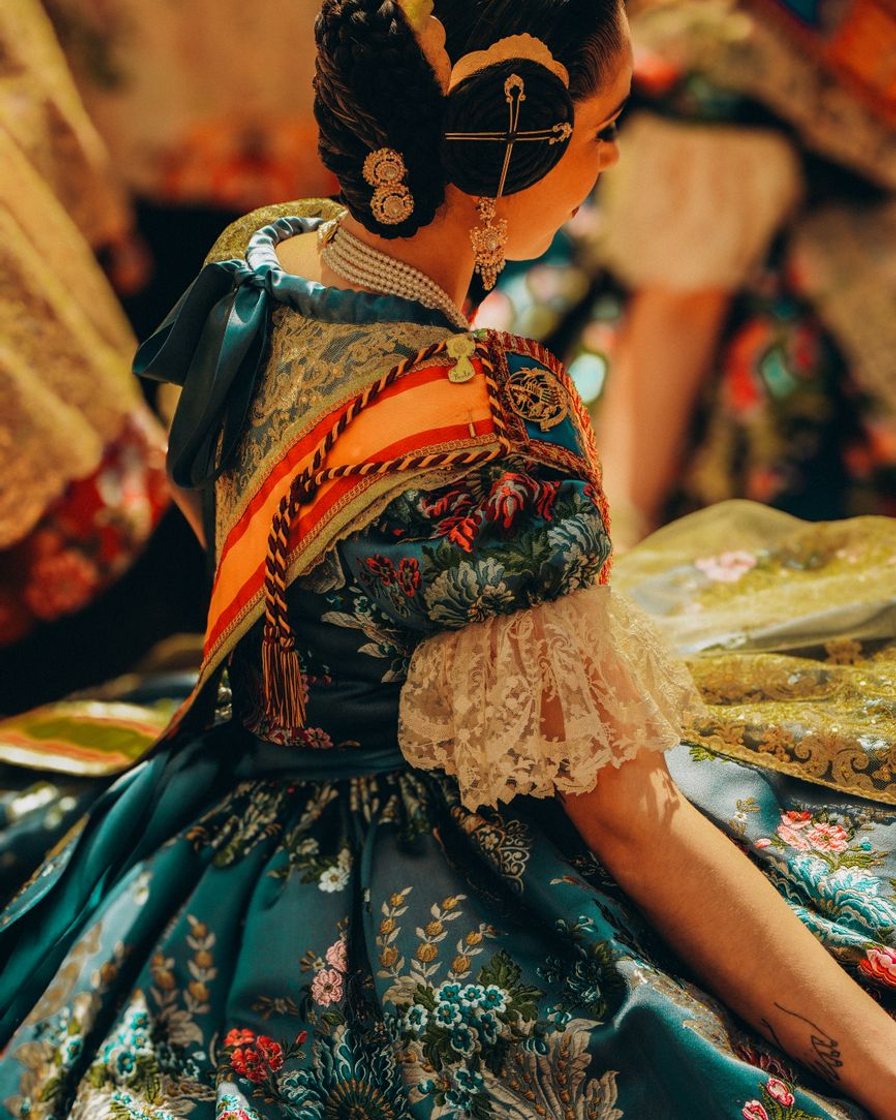
Noise, smoke and other things the programme does not tell you
The local police recorded 19,031 security incidents during the 2025 Fallas, against 19,371 in 2024 and 20,236 in 2023. The trend is down, but the figure is still that of a city in an exceptional state for three weeks.
The Puntos Violeta (support points against sexual violence) helped 4,788 people, 70% of them women in 2025. And leaving Plaza del Ayuntamiento after the mascletà, through narrow streets with tens of thousands of people at once, is the moment most local guides flag as dangerous, and no leaflet mentions.
Noise and smoke have no published figure. The usual advice (earplugs for children, no dogs at the mascletà, avoid the front row) comes from forums and experience, not from any official recommendation we have found. For transport and parking on those days, our guide to getting around Valencia has the special timetables.
If you are looking for the full calendar and the figures from the latest edition, they are in Las Fallas 2026 in Valencia. And if you just want to know which day each thing falls on, see when the Fallas take place.
Sources
Junta Central Fallera, Official Programme of the Fallas 2026. Visit Valencia, 2026 events calendar in its Spanish and English versions. OkDiario and Hello Valencia, February and March 2026. National Geographic Historia and La Vanguardia (Historia y Vida, March 2026), Comunitat Valenciana and ABC Viajar for the origins.
Business Insider, 2025, on the study by the Universitat de València and the Ivie. Distrito Fallas for hospitality spending. LUCA Tourism report for Valencia City Council, 2026. Valencia City Council, local police and fire brigade review, March 2025. Official Press, 2025, for the Puntos Violeta. El Español, March 2024, for the verbenas by-law.
Las Provincias and Valencia Bonita, 2024, for the Ninot and the pass. 2026 accommodation guides for the price ranges.
Frequently asked questions
What is a mascletà?
What is the Cremà and what time does it start?
Can you go inside a falla?
How late does the music go on in the marquees?
Neus Ferrer
Neus has belonged to a falla commission since the age of eight and has seen twenty monuments go up. She knows which streets are closed from the day before and at what time the mascletà can no longer be heard from the centre. She does not recommend a spot where she has not stood for hours.